

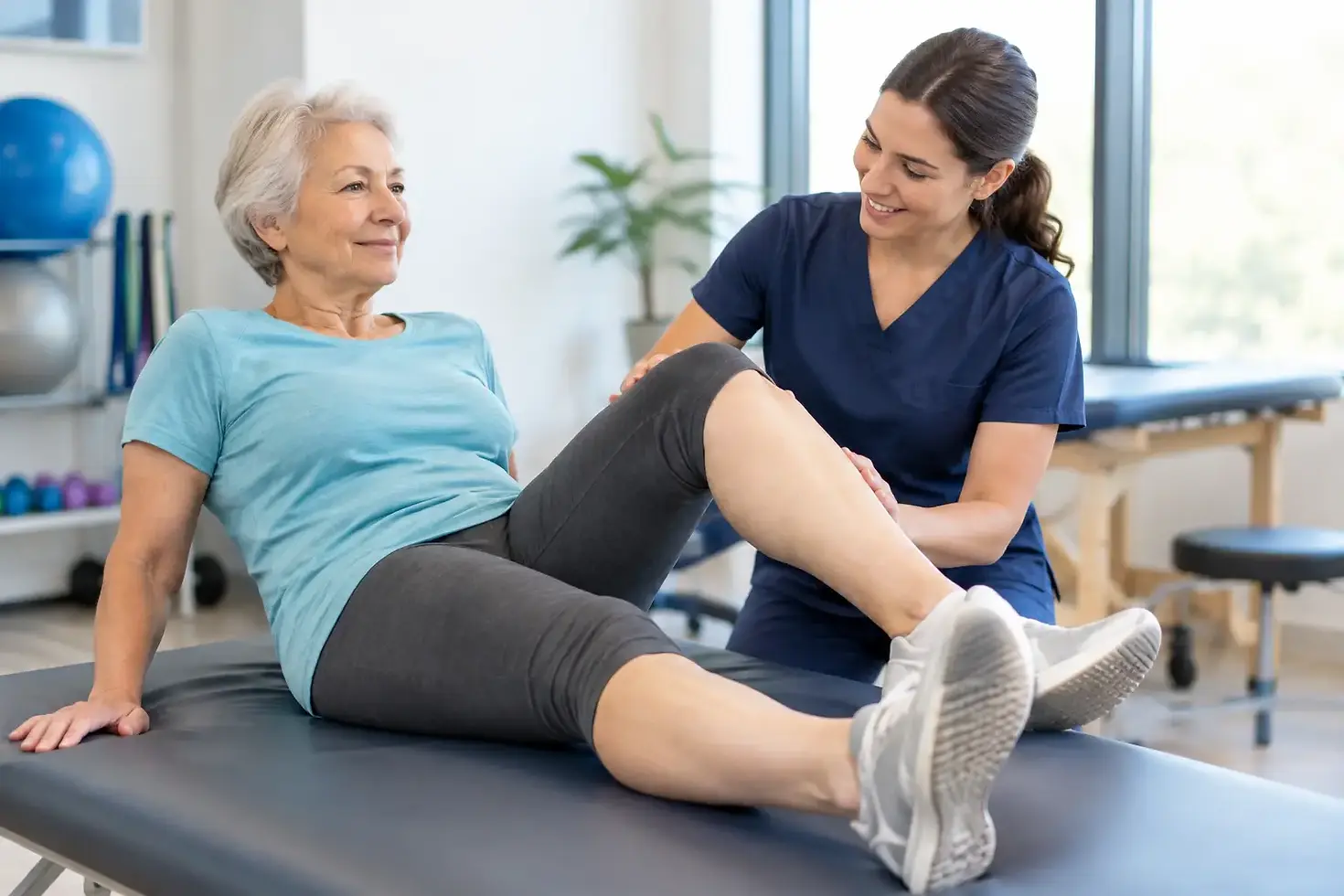
Your Guide to Knee Replacement Therapy Recovery

The first meaningful win after knee replacement is often not a pain-free day. It may be standing up from a chair with more confidence, sleeping a little longer, or taking a smoother walk down the driveway. This guide to knee replacement therapy is designed to help you understand what recovery requires, what progress can look like, and how focused rehabilitation helps you get back to the activities that matter to you.
Knee replacement surgery can be life-changing for people whose arthritis, injury, or joint degeneration has made everyday movement difficult. But surgery is only one part of the process. The new joint needs time to heal, and your muscles, movement patterns, balance, and confidence need intentional rebuilding.
What Knee Replacement Therapy Is Designed to Do
Knee replacement therapy, often called post-operative physical therapy or rehabilitation, is a structured plan to restore motion, reduce swelling, rebuild strength, and improve how you walk and move through daily life. Your surgeon protects the surgical healing process. Rehabilitation helps you make the most of the new joint.
Early treatment is not about pushing through severe pain or proving toughness. It is about creating the right amount of movement at the right time. A personalized plan considers your surgical procedure, current range of motion, swelling, pain response, medical history, home setup, work demands, and goals. Someone who wants to return to gardening has different demands than someone planning to get back to pickleball, golf, or a physically active job.
Most patients need to regain two major types of knee motion: extension, or getting the knee fully straight, and flexion, or bending it enough for stairs, chairs, and daily activities. Strength in the quadriceps, hamstrings, hips, calves, and trunk matters just as much. A knee can bend well but still feel unstable or tiring if the surrounding muscles are not ready to support it.
Your Guide to Knee Replacement Therapy Milestones
Recovery does not move in a perfect straight line. Swelling can increase after an active day, sleep may be inconsistent early on, and one knee can recover differently than the other. Still, most rehabilitation follows a general progression.
The first two weeks: protect healing and establish motion
The earliest phase focuses on managing swelling, controlling pain as directed by your surgical team, and safely beginning movement. You will usually work on ankle pumps, gentle knee bending and straightening, quadriceps activation, short walks with an assistive device, and basic transfers such as getting in and out of bed or a chair.
Swelling management is a major part of this stage. Elevation, ice when appropriate, compression if recommended, medication adherence, and frequent but manageable movement can all help. Excess swelling can make it harder to bend the knee and activate the quadriceps, so controlling it supports every other part of recovery.
Weeks three through six: improve walking, mobility, and control
As healing progresses, therapy typically becomes more active. The goal is to improve knee range of motion, gradually reduce reliance on a walker or cane when safe, and retrain a smoother walking pattern. Exercises may include supported squats, step-ups, cycling progressions, leg raises, balance work, and targeted hip and knee strengthening.
This is also when compensations can show up. You may shift weight away from the surgical side, hike your hip to clear the foot, or avoid fully straightening the knee while walking. These habits are understandable, especially after months or years of knee pain, but they can place extra stress on the opposite knee, hip, low back, or foot. One-on-one rehabilitation helps identify the root cause of those movement changes instead of simply telling you to walk more.
Weeks seven through twelve: build usable strength
By this stage, many people are moving more independently and returning to parts of their normal routine. The focus shifts toward strength, endurance, stair control, balance, and functional tasks. You may progress resistance exercises, controlled lunges or step-downs, longer walks, stationary biking, and low-impact conditioning.
The calendar alone should not determine your progression. A person with minimal swelling, good range of motion, and strong movement control may advance sooner than someone still struggling with pain, stiffness, or significant weakness. The right question is not, “What week am I?” It is, “Can my knee tolerate this activity with good form and recover well afterward?”
Three months and beyond: return to the life you enjoy
Many patients continue to gain strength, motion, and confidence for months after surgery. This phase is about returning to meaningful activities with a body that can handle them. That may mean walking the dog without fear of giving way, traveling comfortably, keeping up with grandchildren, returning to the gym, or participating in recreational sports approved by your surgeon.
Low-impact activities such as walking, cycling, swimming, golf, and strength training are commonly encouraged once you are cleared. Higher-impact sports, jumping, running, and contact activities require a more individualized discussion with your surgeon and rehabilitation provider. The trade-off is straightforward: a new knee can support an active life, but repetitive high-impact loading may not be the best long-term choice for every implant or patient.
The Exercises That Matter Most
The best exercise program is not the longest one. It is the one you can perform correctly, consistently, and at the right intensity for your stage of recovery. Early on, your plan may emphasize restoring knee extension, gently improving flexion, and waking up the quadriceps. Later, it should progress toward movements that resemble real life.
Sit-to-stands build the ability to rise from a chair. Step-ups prepare you for curbs and stairs. Controlled squats improve strength for daily lifting and getting down to lower surfaces. Balance drills help reduce the risk of falls and improve confidence on uneven ground. Hip and trunk strengthening help keep the knee from collapsing inward during walking, stair climbing, and exercise.
Quality matters more than simply adding repetitions. If your knee caves inward, your pelvis drops, or you lean heavily to one side, the exercise may need to be modified. A clinician can adjust the range, resistance, tempo, or support so you can train effectively without reinforcing poor mechanics.
How to Know When You Are Doing Too Much
Some discomfort during rehabilitation is normal. Muscle fatigue, mild soreness, and temporary stiffness after new activity are expected. Sharp pain, a major increase in swelling, warmth or redness that worsens, sudden loss of motion, calf pain, shortness of breath, chest pain, fever, or drainage from the incision should be addressed promptly with your surgeon or medical team.
A useful rule is to watch the 24-hour response. If an exercise session causes symptoms that settle with your usual recovery measures and you are back near baseline by the next day, the dose may be appropriate. If swelling, pain, limping, or stiffness noticeably worsens and remains elevated, you may need to scale back and speak with your provider.
Avoid the all-or-nothing cycle. Doing too little can allow stiffness and weakness to linger. Doing far too much on a good day can create a setback that makes you rest for several days. Consistent, progressive effort is usually more effective than occasional hard workouts.
Why Individualized Rehabilitation Makes a Difference
A generic handout cannot assess how your knee moves, why a stair still feels difficult, or whether your hip and ankle mobility are contributing to stress at the joint. Effective post-surgical care combines hands-on assessment, progressive exercise, gait training, movement education, and clear benchmarks for your goals.
At Elevation Spine & Sports Medicine, rehabilitation is built around extended, individualized appointments rather than a rushed, one-size-fits-all routine. The goal is not only to reduce pain after surgery. It is to restore the strength, mobility, and movement confidence that help you stay active long after the incision has healed.
Your recovery will have challenging days, particularly when swelling or stiffness tests your patience. Keep showing up for the manageable work, communicate openly with your care team, and measure progress by what you can do more comfortably over time. Each well-earned step is part of getting your life back in motion.


Comments