

Jaw Pain Physical Therapy Treatment That Lasts

Your jaw should not be the reason you avoid a steak dinner, wake up with a headache, or lose focus halfway through a work meeting. Jaw pain physical therapy treatment is designed to look beyond the sore spot itself - assessing how your jaw moves, how your neck and shoulders support it, and which daily habits may be keeping the problem active.
For active adults, athletes, and busy families, jaw pain can feel surprisingly disruptive. It may show up as clicking, popping, facial tension, headaches, ear-area discomfort, limited opening, pain while chewing, or a jaw that feels like it catches. The right plan is not a generic sheet of stretches. It is a personalized approach that restores comfortable movement, builds control, and helps you get back to eating, speaking, sleeping, training, and living without constantly guarding your jaw.
What Causes Jaw Pain?
The temporomandibular joints, commonly called TMJs, connect your lower jaw to your skull. They work with a coordinated system of muscles in the face, neck, and upper back. Because that system is active every time you talk, chew, yawn, and swallow, even a small movement problem can become hard to ignore.
Jaw pain often has more than one contributor. Clenching or grinding can overload the muscles. A change in training, stress, poor sleep, dental work, an impact to the face, prolonged computer posture, or neck pain can alter how the jaw moves. Some people notice symptoms after chewing gum frequently or eating harder foods. Others cannot identify one clear trigger because the issue developed gradually.
This is why effective care starts with an assessment rather than an assumption. Clicking alone is not always painful or dangerous, and not every person with jaw pain needs the same treatment. The goal is to determine what is actually limiting your movement and loading tolerance.
How Jaw Pain Physical Therapy Treatment Works
Physical therapy for jaw pain focuses on improving the way your jaw, neck, and surrounding muscles function as a unit. Your physical therapist will review your symptoms, health history, work and training demands, sleep position, and relevant habits such as clenching. They will also assess jaw opening, side-to-side movement, chewing tolerance, muscle tenderness, neck mobility, posture, and movement control.
That evaluation helps identify whether your symptoms appear more related to muscle overload, joint irritation, coordination deficits, neck involvement, or a combination of factors. From there, treatment is built around the root cause and your specific goals.
Hands-on care to reduce tension and restore motion
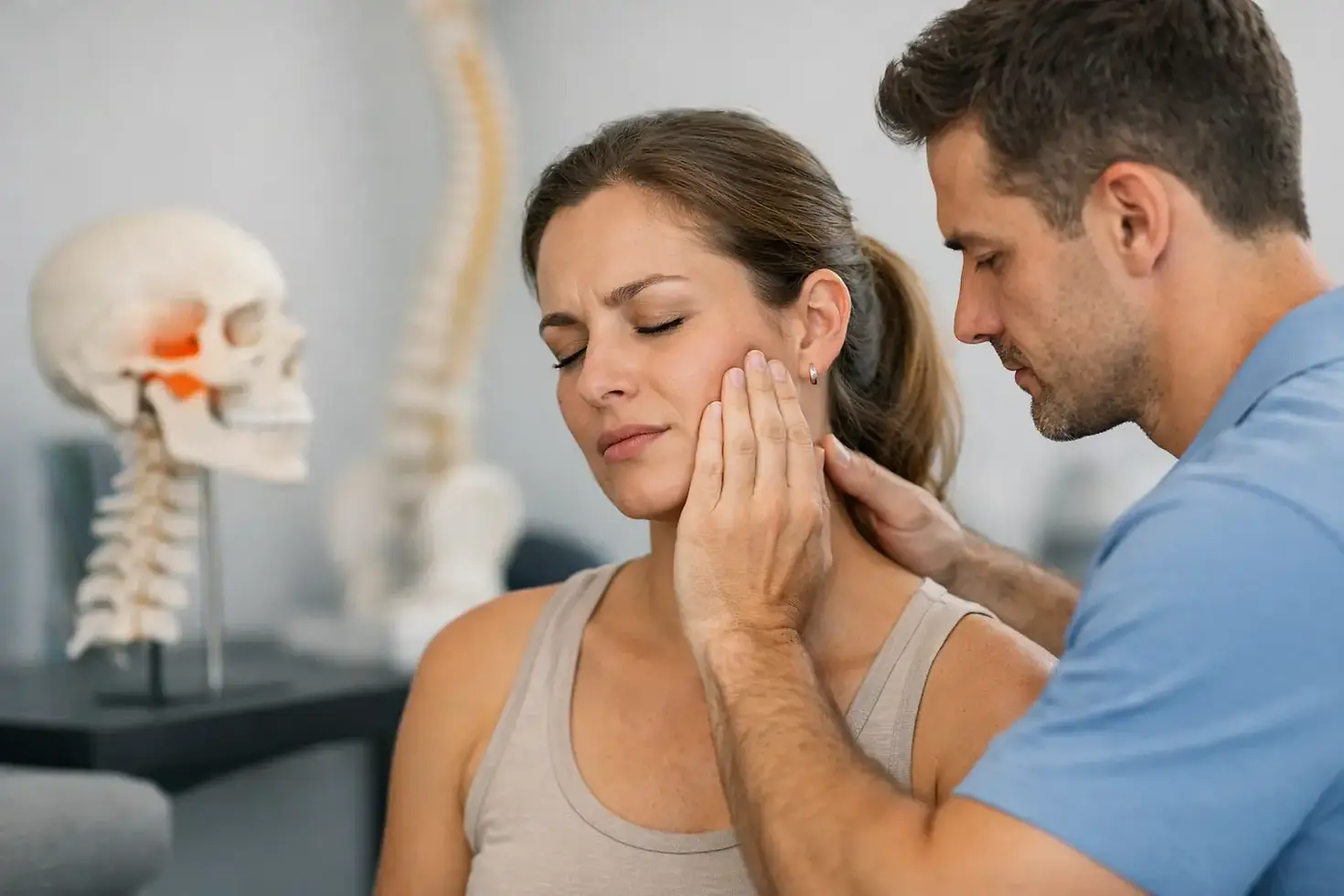
When muscles around the jaw, temples, cheeks, or neck are guarded and sensitive, manual therapy may help reduce tension and make movement more comfortable. Treatment can include targeted soft-tissue work, gentle joint mobilization, and hands-on techniques for the neck and upper back when those areas are contributing to the problem.
This is not about forcing the jaw to move or chasing a temporary release. The purpose is to create a better starting point for active rehabilitation. If you gain motion in the clinic but do not build control and tolerance afterward, symptoms can return when life gets busy again.
Exercise for control, strength, and coordination
Jaw rehabilitation exercises are typically subtle, specific, and progressed based on your response. They may focus on controlled opening and closing, side-to-side motion, relaxation of overactive muscles, tongue positioning, and endurance of the muscles that support efficient jaw movement.
Your plan may also include neck and upper-back exercises. Forward-head posture is rarely the only reason for jaw pain, but the neck and jaw share muscular and neurologic connections. Improving cervical mobility, deep neck muscle endurance, and shoulder-blade control can reduce unnecessary strain on the jaw system, especially for people who spend hours at a desk, in the car, or looking down at a phone.
For athletes, the program should account for the demands of your sport. A combat athlete with a history of impact, a lifter who clenches heavily during maximal efforts, and a swimmer whose symptoms increase with breathing mechanics will not need identical progressions.
Education that changes the daily load on your jaw
The habits you repeat between appointments matter. Your provider may help you identify positions and behaviors that keep the jaw irritated, such as resting with your teeth together, chewing gum throughout the day, biting nails, leaning your chin into your hand, or opening wide during a yawn without support.
A useful resting position is generally simple: lips gently together, teeth apart, and tongue relaxed against the roof of the mouth. That does not mean you need to monitor your jaw every second. It means learning how to recognize unnecessary tension and having practical ways to reduce it.
Food choices may be temporarily adjusted if chewing is painful. This is not a permanent soft-food diet. It is a short-term load-management strategy while your jaw calms down and rebuilds tolerance. As symptoms and movement improve, your therapist can guide a gradual return to normal foods and activities.
What a Personalized Plan May Include
A comprehensive plan may combine manual therapy, rehabilitation exercise, activity modification, and home strategies. Depending on your presentation, a clinician may also use evidence-based modalities such as dry needling to address muscle-related pain and tension. The best approach depends on your symptoms, examination findings, medical history, and comfort level.
At Elevation Spine & Sports Medicine, longer one-on-one appointments allow time to assess the full movement picture and progress care with intention. Jaw symptoms are not treated as an isolated body part when the neck, posture, training demands, or stress-related muscle tension are clearly part of the story.
Some patients improve quickly when the issue is recent and mostly muscular. Persistent symptoms, a history of repeated flare-ups, significant neck involvement, or high levels of clenching may require a more gradual process. Progress is measured by more than pain on the treatment table. Meaningful markers include easier chewing, less morning tension, improved jaw opening, fewer headaches, better sleep, and confidence returning to exercise or sport.
When Physical Therapy Is a Good Fit
Physical therapy can be appropriate for many people dealing with temporomandibular disorder-related symptoms, muscle tension around the jaw, headaches associated with jaw and neck dysfunction, or pain that develops after an injury. It can also be valuable before or alongside dental care when a night guard, bite concerns, or grinding are part of the discussion.
Collaboration matters. A physical therapist may recommend coordination with your dentist, primary care physician, oral surgeon, or another specialist when needed. If a dental appliance is prescribed, rehabilitation can still help address the movement and muscular factors an appliance alone may not change.
There are situations that need prompt medical or dental evaluation rather than routine rehabilitation. Seek care quickly for a jaw that is locked open or closed, major swelling, fever, a suspected fracture, severe pain after trauma, facial numbness or weakness, unexplained weight loss, or signs of infection. A thorough provider will recognize when referral is the right next step.
What You Can Do Between Visits
Your home plan should be realistic enough to use on a stressful Tuesday, not just on a quiet weekend. In many cases, a few precise exercises performed consistently are more useful than a long routine you never complete.
Pay attention to patterns without becoming overly protective of your jaw. Notice whether symptoms rise after long meetings, heavy lifting, gum chewing, poor sleep, or stressful days. Use the strategies your provider gives you to reduce tension, but continue normal movement within a comfortable range. Avoid repeatedly testing painful motions or aggressively stretching the jaw, which can aggravate an already sensitive joint or muscle system.
If you train, do not assume you must stop everything. Your therapist can help modify intensity, breathing, bracing, or exercise selection while you recover. The aim is to keep you active when it is safe to do so, then build back toward full performance.
A Better Path Back to Comfortable Movement
Jaw pain can be frustrating because it follows you into ordinary moments: breakfast, conversation, sleep, work, and workouts. But it is also treatable when care addresses the actual drivers of your symptoms instead of simply telling you to avoid using your jaw.
A thoughtful physical therapy plan gives you a clear path forward - calm the irritated tissues, improve mobility where it is limited, build better control, and return to the activities that matter to you. If your jaw is limiting your day, an individualized evaluation can help you move past temporary relief and regain confidence in every bite, conversation, and training session.


Comments