

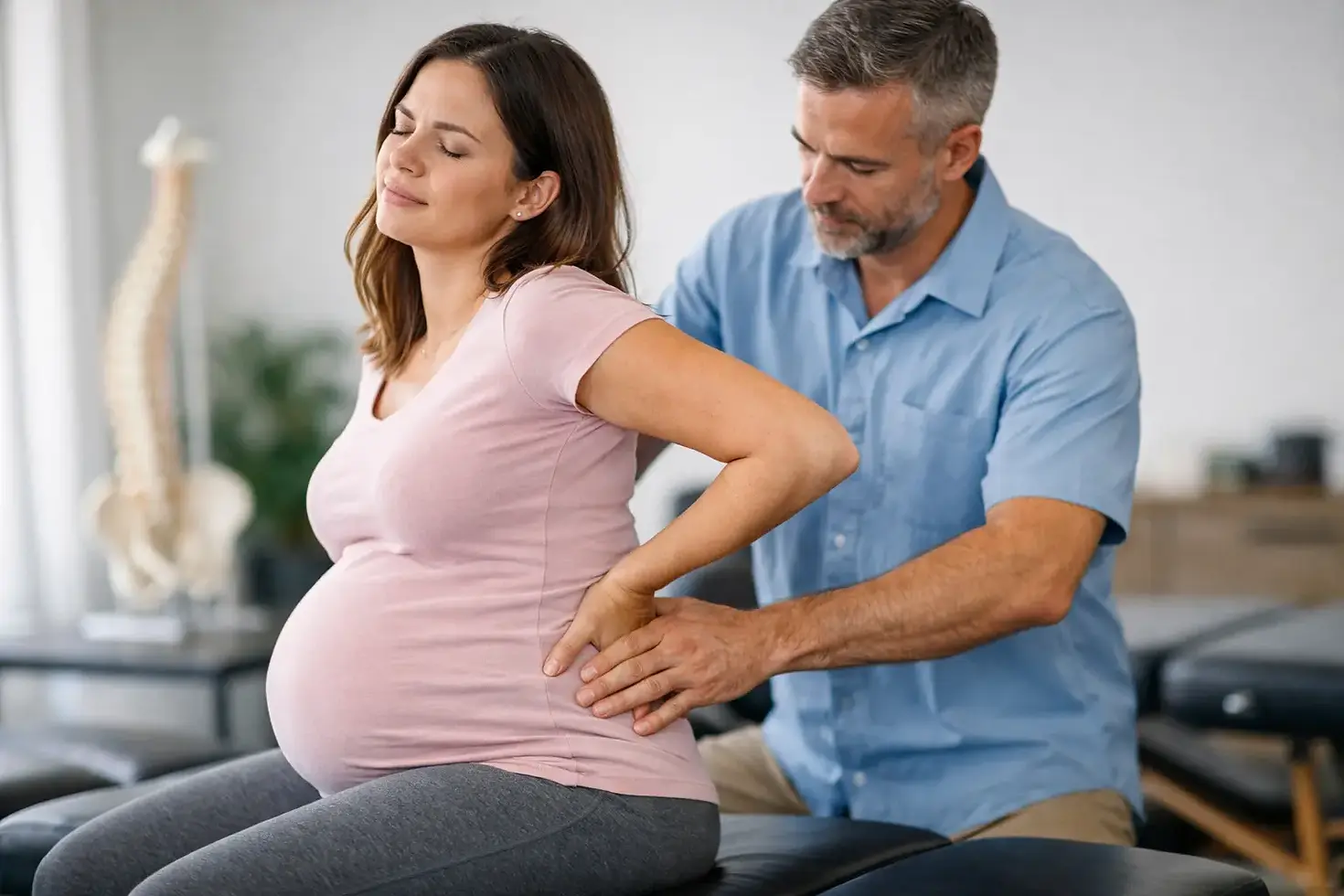
Is a Chiropractor for Pregnancy Back Pain Safe?

Pregnancy can change the way your body moves long before your baby bump feels large. A growing abdomen shifts your center of gravity, hormones increase joint laxity, and everyday tasks such as rolling in bed, standing at work, or picking up a toddler can suddenly strain your low back and pelvis. For many expecting parents, a chiropractor for pregnancy back pain can be a useful part of a conservative care plan - but safety, provider training, and communication with your prenatal team come first.
The goal should not be to simply chase a painful spot. Pregnancy-related back pain often reflects a combination of changing load, reduced hip or thoracic mobility, pelvic irritation, muscle fatigue, and movement habits that no longer work for your changing body. A thoughtful plan addresses those contributors while helping you stay comfortable and active.
Why pregnancy back pain happens
Low back pain is common during pregnancy, but common does not mean you have to push through it without support. As pregnancy progresses, the body adapts to carry additional weight in front of the pelvis. Many people naturally lean back to compensate, which can increase demand on the muscles of the low back, hips, and upper back.
Pregnancy hormones also affect connective tissue. This is a normal and necessary process, but greater joint mobility can make the pelvis feel less stable during walking, climbing stairs, getting out of a car, or turning in bed. Some people notice pain centered in the low back. Others feel discomfort at the sacroiliac joints, along the buttock, in the groin, or around the pubic bone.
Your pre-pregnancy movement history matters, too. An active runner, lifter, or fitness enthusiast may need to modify training volume and technique as symptoms change. Someone who works at a desk or spends long shifts on their feet may need a different strategy. The best care begins with listening to what aggravates your pain, what you still want to do, and how your symptoms affect daily life.
Is a chiropractor for pregnancy back pain safe?
For many people with uncomplicated pregnancies, chiropractic care can be an appropriate conservative option when it is provided by a clinician who understands prenatal considerations and coordinates care appropriately. Treatment should be adapted to your stage of pregnancy, symptoms, medical history, and comfort level. It is not a one-size-fits-all approach.
A pregnancy-informed evaluation should include a detailed health history and questions about your prenatal care. Your provider should ask about the location and behavior of your pain, prior injuries, exercise routine, previous pregnancies, and any conditions identified by your OB-GYN or midwife. They should also screen for symptoms that do not belong in a musculoskeletal treatment plan.
Hands-on treatment may include gentle joint mobilization or chiropractic adjustments, soft-tissue work, and position modifications that avoid unnecessary pressure on the abdomen. Many clinicians use supportive pillows or pregnancy-specific positioning so you can lie comfortably on your side or in another well-tolerated position. Force, technique, and treatment frequency should be individualized, not based on a preset package of visits.
Chiropractic care is not intended to replace prenatal medical care. Your OB-GYN or midwife remains the right source for questions about pregnancy health, medications, labor concerns, and fetal well-being. If you are considering care for the first time, especially with a higher-risk pregnancy or a new diagnosis, ask your prenatal provider whether there are any precautions specific to you.
When to contact your prenatal provider first
Back pain can occasionally signal something beyond a muscle or joint problem. Contact your OB-GYN, midwife, or urgent medical service promptly if back pain is severe, sudden, or paired with vaginal bleeding, fluid leakage, fever, painful urination, regular contractions, abdominal pain, dizziness, new swelling, severe headache, chest pain, shortness of breath, or reduced fetal movement later in pregnancy.
New numbness, progressive leg weakness, loss of bowel or bladder control, or pain following a fall also deserves immediate medical attention. A responsible musculoskeletal provider will recognize these red flags and direct you to the appropriate level of care rather than trying to treat around them.
What a personalized prenatal treatment plan can include
The most effective care plan often combines hands-on treatment with practical movement strategies. An adjustment may help improve motion or reduce sensitivity for some patients, but lasting progress usually requires more than passive care alone. The right plan helps you build confidence in how you move through the demands of pregnancy.
At Elevation Spine & Sports Medicine, care is designed around a detailed evaluation and one-on-one treatment time. For pregnancy-related pain, that may mean identifying whether limited hip motion, pelvic load intolerance, poor trunk endurance, upper-back stiffness, or a recent change in activity is contributing to your symptoms. From there, treatment can be adjusted as your body and goals change.
Manual care and mobility work
Gentle chiropractic techniques and manual therapy may help reduce joint stiffness and muscle guarding around the low back, hips, and pelvis. For someone whose pain spikes after sitting, restoring comfortable hip and upper-back movement may make standing and walking feel more manageable. For someone whose symptoms build during long work shifts, treatment may focus more on reducing irritation and finding positions that unload sensitive areas.
The response is individual. Some patients feel meaningful relief after an early visit, while others improve gradually as hands-on care is paired with exercise, pacing, and better load management. A good clinician sets realistic expectations and tracks functional changes, not just pain scores.
Strength, stability, and movement coaching
Pregnancy is not the time to stop moving altogether unless your prenatal provider has given you specific restrictions. Appropriate exercise can support circulation, strength, mobility, mood, and day-to-day tolerance. The key is choosing exercises that fit your symptoms and current capacity.
A clinician may guide you through breathing mechanics, gentle trunk control, hip strength, and functional movements such as squatting, hinging, step-ups, and getting up from the floor. These are not about training through pain or chasing an intense workout. They are about giving your body more options for lifting a laundry basket, carrying groceries, walking the dog, or continuing a modified gym routine.
Simple changes can matter. A wider stance during a squat, a pillow between the knees at night, more frequent movement breaks, supportive footwear, or a different way of getting out of bed may reduce repeated strain. Your plan should be practical enough to use on a busy Tuesday, not just in the treatment room.
Training modifications for active patients
If fitness is part of your life, pregnancy back pain can be frustrating because it may interrupt the activities that help you feel like yourself. The answer is not always to quit. It may be to adjust.
A personalized plan can help you decide when to reduce load, shorten range of motion, change impact, add recovery days, or substitute an exercise that is better tolerated. A runner with pelvic pain may benefit from temporarily alternating walking and running. A lifter may need to modify bracing, stance, depth, or bar position. Someone attending group classes may need clear guardrails for choosing options without feeling left behind.
Symptoms provide useful feedback, but pain is not the only measure. Consider how you feel during activity, later that day, the next morning, and after repeated sessions. If a modification allows you to move with manageable symptoms and recover well, it may be a better fit than complete inactivity. If pain steadily escalates or function declines, it is time to reassess.
How to choose the right provider
When looking for prenatal musculoskeletal care, ask whether the provider regularly treats pregnancy-related low back and pelvic pain and how they adapt positioning and techniques. Ask what an evaluation includes, whether exercise and rehabilitation are part of the plan, and how they communicate with your OB-GYN or midwife when needed.
Be cautious of guarantees, claims that one treatment will correct every pregnancy symptom, or recommendations that ignore your medical history. You deserve care that respects pregnancy as a dynamic physical process, explains the reasoning behind treatment, and gives you an active role in decisions.
The right provider will also understand that your goal may be bigger than pain relief. You may want to keep working comfortably, sleep with fewer interruptions, play with your children, maintain a safe fitness routine, or prepare for the physical demands of delivery and postpartum recovery. Those goals should shape the plan.
Pregnancy asks a lot of your body, and discomfort can make even ordinary movement feel like a major task. With appropriate screening, coordinated prenatal care, and a personalized approach to mobility, strength, and daily movement, you can take practical steps toward feeling more capable in the activities that matter to you.


Comments