

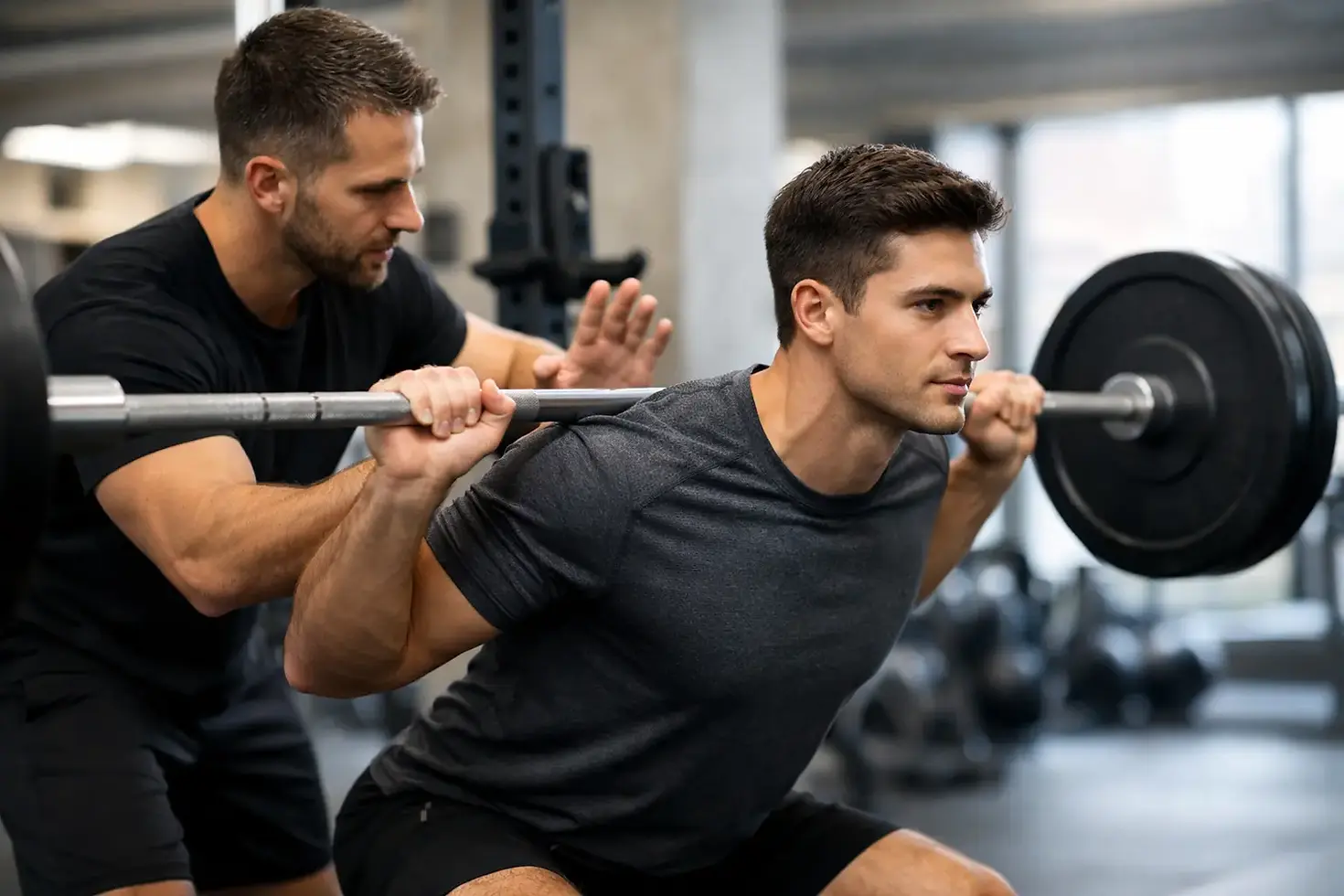
How to Correct Lifting Form Without Losing Progress

A squat that feels strong at 135 pounds can look very different at 225. A deadlift that leaves your back feeling fine one week may cause stiffness the next. If you are wondering how to correct lifting form, the answer is rarely to memorize one perfect posture or stop training altogether. It is to identify where your movement breaks down, understand why it happens, and choose a correction you can repeat under real training conditions.
Good form is not about looking identical to someone else in the gym. Bodies have different proportions, mobility histories, injury backgrounds, and goals. Good form is movement that lets you create force efficiently, control the load, and train consistently without pain or unnecessary compensation.
Start by Separating Normal Effort From a Warning Sign
Hard training creates effort. Muscles burn, breathing gets heavy, and some soreness after a new program is expected. Those sensations are different from sharp pain, catching, numbness, tingling, swelling, a feeling of instability, or symptoms that worsen with each set.
Pain does not automatically mean you have caused damage, but it is useful information. If your shoulder pinches during pressing, your knee pain increases as you squat, or your low back remains aggravated for days after deadlifting, do not simply push through because a program says to. Modify the movement, load, range of motion, or training volume while you determine the root cause.
A video from the side and front can be especially useful. Record a few working sets, not just a light warm-up. Form often changes when the bar gets heavy, fatigue builds, or you are trying to keep pace with a training partner.
How to Correct Lifting Form: Change One Variable at a Time
The fastest correction is not always the most aggressive one. If you change your stance, shoes, grip, load, tempo, and exercise variation all at once, you will not know what helped. Start with the clearest limitation, then retest.
First, reduce the load enough to make a quality repetition possible. This is not losing progress. It is creating the right environment for your nervous system to learn a better pattern. A small reduction in weight can reveal whether poor control is a strength issue, a mobility restriction, or simply a cue you have not practiced.
Next, use a tempo that exposes the problem. A three-second lowering phase, a brief pause at the bottom of a squat, or a controlled deadlift from the floor can make it easier to feel where you lose position. Slower is not always better for athletic performance, but it is often valuable while rebuilding control.
Then choose one cue. Too many instructions can make lifters stiff, overthink every repetition, and move worse. The right cue depends on the person and the lift. “Push the floor away” may help one deadlifter maintain tension. “Ribs down” may help another lifter avoid overextending during an overhead press.
Build a Stable Setup Before the Rep Begins
Most form errors begin before the weight moves. Rushing setup creates a shaky first repetition, and the rest of the set often follows it.
For lower-body lifts, establish foot pressure first. Think of keeping contact through the heel, base of the big toe, and base of the little toe. Your feet do not need to be perfectly flat in every exercise, but a stable connection to the ground gives your hips and knees a more reliable base.
For squats, find a stance that allows you to reach depth without your feet collapsing inward or your torso losing control. A slightly wider stance or modest toe angle may be appropriate for one person, while another may be strongest and most comfortable with a narrower setup. There is no universal stance width that fits every hip structure.
For deadlifts, bring the bar close before you pull. Create tension through your upper back and trunk before the plates leave the floor. The goal is not to force an exaggerated arch in your low back. Instead, maintain a controlled trunk position that you can hold as your hips and shoulders rise together.
For presses and pulling movements, set your shoulder blade position without pinning it rigidly. Your shoulder blades need to move during many lifts, especially overhead. Think control rather than stiffness. Keep your ribs and pelvis organized so your shoulders are not forced to do all the work.
Common Breakdowns and Better Corrections
Squat: Knees Cave In or Heels Lift
Knees moving slightly inward is not automatically dangerous, particularly during a maximal effort. But a sudden collapse paired with pain, loss of balance, or an inability to control the descent deserves attention. Reduce the load, slow the descent, and practice keeping steady foot pressure. A goblet squat or a squat to a box can help you regain control without removing the pattern entirely.
Heels lifting may relate to ankle mobility, stance, footwear, or how you are distributing pressure. Try a small heel elevation, a slightly different stance, or ankle mobility work. If heel elevation immediately improves your squat, it can be a useful training tool while you work on the mobility and control limitations involved.
Deadlift: Low Back Rounds or Hips Shoot Up
A rounded back is not always an emergency. Some experienced lifters can safely tolerate a small amount of upper-back rounding. The concern is a rapid loss of position, especially in the low back, that occurs because the load exceeds your current capacity or because you cannot create tension from the starting position.
Raise the bar using blocks or plates, use a kettlebell deadlift, or shorten the range temporarily. These regressions let you train the hip hinge while building the strength and confidence needed to return to the floor. If your hips shoot up before the bar leaves the ground, think about pressing through the floor and keeping the bar close rather than yanking it upward.
Overhead Press: Ribs Flare and Low Back Takes Over
An overhead press should involve your shoulders, upper back, trunk, and hips. When the ribs flare sharply and the low back arches, the movement may be asking for more shoulder mobility or pressing strength than you currently have.
Try a half-kneeling press, landmine press, or lighter dumbbell press. These options can limit compensation and make it easier to feel your trunk position. Improving thoracic mobility and shoulder control may help, but do not assume every overhead limitation is a mobility problem. Sometimes the simplest answer is a load that is too heavy for clean repetition quality.
Use Mobility and Strength Together
Stretching alone rarely fixes lifting form for long. If you gain ankle range but cannot control that range in a squat, the same compensation may return when you add weight. Likewise, strength alone may not solve a restriction that prevents you from reaching a useful position.
Pair mobility work with a controlled version of the movement you want to improve. For example, ankle mobility drills followed by paused goblet squats can support better squat mechanics. Hip mobility work followed by a light Romanian deadlift can reinforce a more confident hinge. The exact plan depends on what your body needs, not on a generic corrective exercise list.
It also helps to consider your total training load. Poor form near the end of every session may be less about technique and more about fatigue, recovery, nutrition, sleep, or a program that progressed too quickly. Improving form may mean fewer hard sets for a short period, not more exercises.
When a Professional Assessment Makes Sense
A coach can be valuable for lift-specific feedback, especially when you are learning a new barbell movement or preparing for competition. A sports chiropractic or physical therapy assessment is particularly helpful when form changes because of pain, old injuries, repeated flare-ups, post-surgical limitations, or a noticeable side-to-side difference.
At Elevation Spine & Sports Medicine, a movement assessment can look beyond the single painful rep. Your clinician can evaluate mobility, strength, trunk and joint control, training history, and the demands of your sport or gym routine. From there, evidence-based treatments and a personalized rehabilitation plan can address the root cause while keeping you as active as safely possible.
The goal is not to make every lift look textbook-perfect. It is to build a body that can handle the positions, loads, and repetitions your life and training require. Start with a manageable load, practice a consistent setup, and let high-quality repetitions earn the right to become heavier ones.



Comments