
Can You Heal a Meniscus Tear Without Surgery?

A deep squat that suddenly catches. A pivot during pickleball that leaves your knee swollen the next morning. A nagging pain on the inside of the knee that will not settle after a run. If you are trying to heal a meniscus tear, the question is not simply whether you need surgery. It is whether your knee has the right conditions to calm down, move well, get stronger, and tolerate the activities you want to return to.
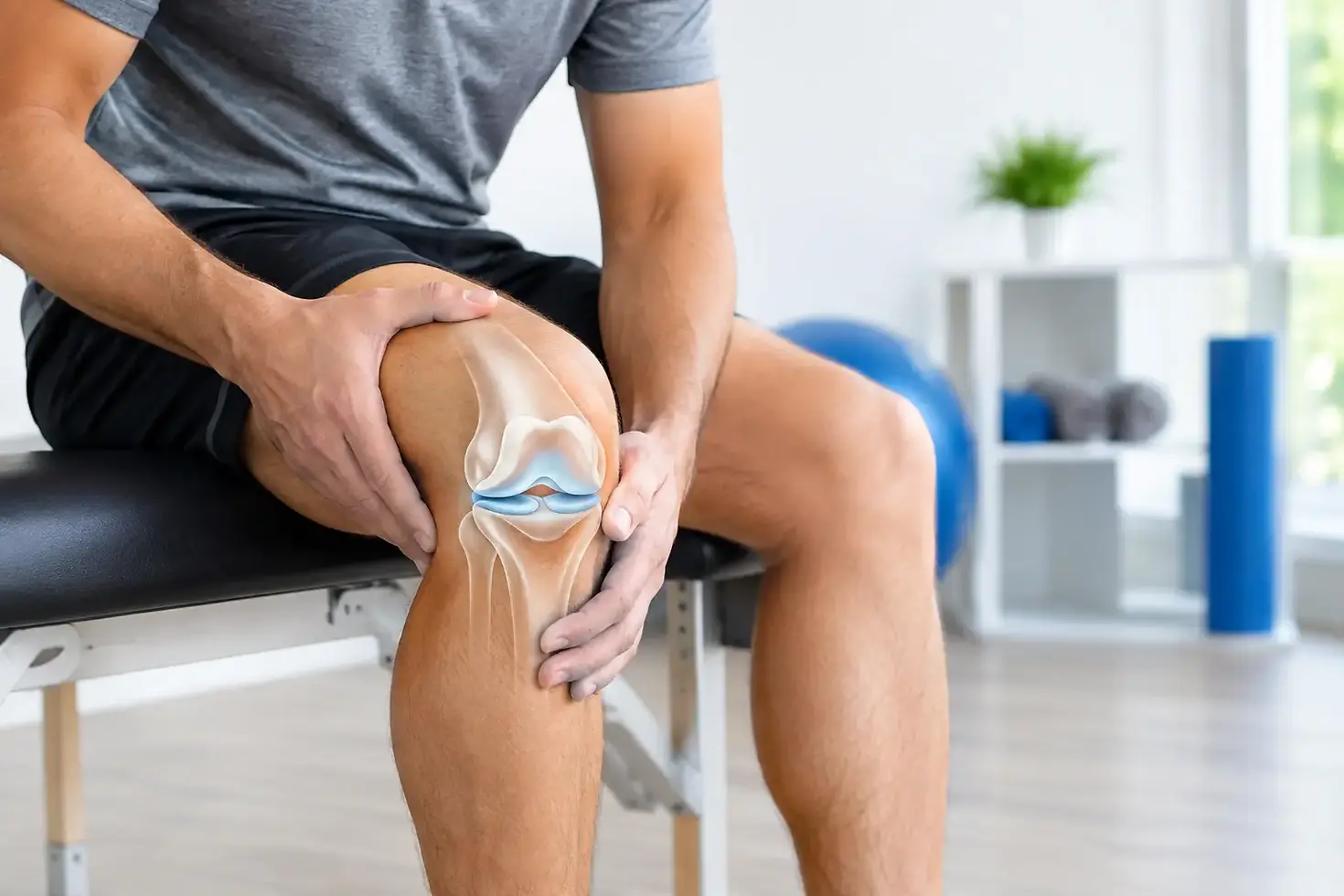
The meniscus is not a disposable cushion. Each knee has two crescent-shaped pieces of cartilage that help distribute force, add joint stability, and protect the surfaces of the knee during walking, lifting, cutting, and landing. A tear can range from a small, stable injury that responds well to rehabilitation to a displaced tear that mechanically blocks knee motion and may require orthopedic care. The right plan depends on the tear, your symptoms, your goals, and how your knee performs under load.
Can You Heal a Meniscus Tear Naturally?
Some meniscus tears can improve significantly without surgery. That does not always mean the torn tissue fully grows back in the same way a muscle strain heals. It means pain, swelling, mobility, strength, and function can improve enough for a person to return to daily life, training, or sport without an operation.
Blood supply matters. The outer portion of the meniscus, sometimes called the red zone, receives more blood flow and has a better healing potential than the inner portion. Tears in the inner, less vascular area are less likely to biologically repair on their own. Still, an MRI finding does not dictate how much pain you will have or what you can do. Many active adults have meniscal changes on imaging that are not the main source of their symptoms.
A conservative approach is often reasonable when the knee is stable, motion is mostly intact, symptoms are improving, and there is no true locking. It is especially common for degenerative meniscus tears, which can develop gradually with age and activity rather than from one major injury. Progressive physical therapy can produce outcomes comparable to surgery for many people with these tears.
That said, “natural” should not mean passive. Resting until the knee feels better but never rebuilding strength, balance, and movement control often leads to a frustrating cycle: symptoms improve, activity resumes too quickly, and the knee flares again. Recovery works best when you give the tissue time to settle while progressively preparing the entire leg to handle load.
When a Meniscus Tear Needs Prompt Evaluation
A knee should be assessed promptly after a twisting injury, direct impact, or sudden pop followed by swelling. Meniscus injuries can occur alongside ligament injuries, cartilage damage, or fractures, and each requires a different plan.
Seek urgent medical evaluation if you cannot bear weight, the knee is visibly deformed, it becomes hot and severely swollen, you have fever or calf swelling, or pain is escalating rather than improving. A knee that is truly locked - meaning you cannot fully straighten or bend it because something feels physically stuck - also deserves timely orthopedic evaluation. A displaced bucket-handle tear is one possible cause and may not respond to exercise alone.
Other signs that it is time for a thorough examination include repeated giving way, persistent joint swelling after light activity, loss of motion, or symptoms that fail to improve over several weeks. An experienced clinician can examine joint-line tenderness, knee stability, range of motion, strength, and movement patterns before deciding whether imaging or referral is appropriate.
The First Phase: Calm Symptoms Without Shutting Down
In the early days after a flare-up or injury, the goal is to reduce aggravation while preserving as much comfortable movement as possible. You may need to temporarily avoid deep loaded knee bending, twisting on a planted foot, running, jumping, and cutting. That does not necessarily mean avoiding all activity.
Gentle range-of-motion work, easy walking if it does not worsen symptoms, and controlled muscle activation can help prevent stiffness and quadriceps weakness. Ice may offer short-term comfort after activity, while compression and elevation can help manage swelling. Medication decisions should be made with your physician or pharmacist, particularly if you have medical conditions or take other medications.
Pain is useful information, but it should not be the only guide. A tolerable level of discomfort during rehabilitation can be acceptable if it settles quickly and does not create more swelling, limping, or loss of motion later that day or the next morning. A sharp catch, a sense of instability, or a significant symptom increase is a signal to modify the activity.
Rehabilitation That Supports Meniscus Tear Recovery
A personalized rehabilitation plan should address more than the painful spot in the knee. The meniscus absorbs forces created by the whole lower body. If the hip is weak, the ankle is stiff, or single-leg control is poor, the knee may take more rotational and compressive stress than it can currently manage.
Restore Motion and Control
Early rehabilitation often focuses on regaining comfortable knee extension and flexion, reducing swelling, and restoring a normal walking pattern. Full knee extension matters more than many people realize. If you walk with a slightly bent knee for weeks, the quadriceps can lose efficiency and everyday tasks such as stairs become harder.
Manual therapy may be appropriate when joint or soft-tissue restrictions are contributing to limited motion. At Elevation Spine & Sports Medicine, care is built around a one-on-one assessment so treatment can target the movement restrictions and loading patterns that are actually affecting your knee, rather than applying the same protocol to every tear.
Build Strength Where It Counts
As symptoms allow, rehabilitation progresses to controlled strengthening for the quadriceps, hamstrings, glutes, calves, and trunk. Exercises may begin with supported squats, bridges, step-ups, and leg-strengthening movements in comfortable ranges. The specific exercise matters less than the dosage, form, and progression.
A runner may need a program that restores impact tolerance and single-leg control. A recreational lifter may need to gradually rebuild confidence in squatting and hinging. A field athlete needs to earn the ability to decelerate, change direction, and react under fatigue. These are different demands, and a generic sheet of exercises rarely covers all of them.
Progress Back to Sport and Training
Returning to activity is not a date on a calendar. It is a set of capabilities. Before returning to a cutting sport, for example, you should be able to walk, climb stairs, squat, jog, hop, and perform sport-specific drills without significant pain, swelling, apprehension, or compensation.
A graded return may start with cycling, pool work, or straight-line walking before progressing to jogging, faster running, jumping, and directional change. Your knee should tolerate one level consistently before you add the next. Trying to make up lost training in one weekend is one of the most common ways to turn a manageable recovery into a prolonged setback.
When Surgery May Be the Better Choice
Surgery is not a failure of rehabilitation, and rehabilitation is not a lesser option. Both have a place. Surgical consultation may be appropriate for a displaced tear causing mechanical locking, a repairable traumatic tear in an active person, associated ligament injury, or persistent symptoms that limit life despite a well-executed conservative program.
When surgery is recommended, ask what procedure is being considered and why. Meniscus repair aims to preserve and stitch the tissue when the tear pattern and blood supply make that realistic. Recovery is usually more protective and takes longer because the repair needs time to heal. Partial meniscectomy removes damaged tissue that cannot be repaired and may allow a quicker early recovery, but preserving meniscal tissue whenever appropriate is valuable for long-term knee joint health.
Post-surgical rehabilitation remains essential. Whether you have a repair or partial meniscectomy, your outcome depends on restoring motion, strength, gait, balance, and the capacity to meet your sport or work demands.
Common Mistakes That Slow Recovery
The biggest mistake is treating a meniscus tear as either an emergency that guarantees surgery or a minor irritation you can train through. Neither assumption respects the complexity of the knee. Another common error is relying on complete rest for too long, which can increase stiffness and weakness.
People also tend to judge recovery only by pain. A knee can feel fine during a workout but swell later because the load exceeded its current capacity. Tracking next-day swelling, range of motion, confidence, and quality of movement gives a clearer picture of progress.
Finally, do not rush back because the calendar says you should be ready. Your return-to-sport plan should be based on your knee's response, your strength and control, and the specific demands waiting for you.
A meniscus tear can interrupt the activities that keep you active, competitive, and connected to your routine. With an accurate assessment and a personalized plan, many people can regain strong, confident movement - one well-tolerated step at a time.


Comments