

Chiropractor & Physical Therapist for Spondylolisthesis Treatment in Carrollton, TX
Spondylolisthesis happens when a small piece of bone in the spine (called the pars) breaks on both sides, which allows one vertebra to slip forward over the one beneath it. This can happen anywhere in the spine, but it’s most common in the lower back, especially at the L5–S1 or L4–L5 levels.
When the vertebra slips, it can cause lower back pain, tight muscles, or even pinch nearby nerves, which may create symptoms like leg pain, numbness, or weakness. This condition often develops after spondylolysis (a stress fracture in the same area) and is most frequently seen in athletes such as gymnasts, football players, cheerleaders, and dancers—sports that involve a lot of bending backward and repeated stress on the lower spine.
What are the Main Causes of Spondylolisthesis?
Spondylolysis: One of the most common causes of spondylolisthesis is spondylolysis, which is a stress fracture or defect in the pars interarticularis (the part of the vertebra that connects the upper and lower facets). When this defect weakens the vertebra, it can lead to slippage.
Degenerative: As people age, the discs between the vertebrae can lose their elasticity and height, leading to instability that allows one vertebra to slip over the other.
Congenital: Some individuals may be born with an abnormal spinal structure that predisposes them to spondylolisthesis.
Trauma or Injury: A sudden injury or trauma to the spine can also cause the vertebra to slip.
Other Factors: Conditions like arthritis or spinal tumors can contribute to the development of spondylolisthesis.
Symptoms of Spondylolisthesis:
Lower back pain: This is the most common symptom, often aggravated by activity or certain movements.
Radiating pain: If the slippage compresses nearby nerves, it can cause pain that radiates down the legs (sciatica).
Numbness or weakness: Nerve compression can lead to numbness, tingling, or weakness in the legs or feet.
Limited range of motion: The spine may feel stiff or rigid, limiting mobility.
In severe cases, spondylolisthesis can cause difficulty walking or performing daily activities due to pain or nerve involvement.
Grades of Spondylolisthesis:
The severity of the slippage is often classified into four grades based on how far the vertebra has slipped (typically anterior or forward, referred to as anterolisthesis):
Grade I: 0-25% slippage
Grade II: 25-50% slippage
Grade III: 50-75% slippage
Grade IV: 75-100% slippage
Grade V (Spondyloptosis): Complete slippage, where the vertebra has completely fallen off the one below it.
X-rays are typically used to confirm the diagnosis and assess the degree of slippage. In some cases, an MRI or CT scan may be used for further evaluation, especially if nerve compression is suspected.
How can Chiropractic Care and Physical Therapy Help with Spondylolisthesis?
At Elevation, we utilize a wide variety of techniques and treatments to improve symptoms related to Spondylolisthesis. Depending on the severity and stage of the Spondylolisthesis and location can result in different treatment programs. At Elevation, our goal is to reduce symptoms and pain associated with the fracture and then stabilize the muscle tissue around it with strengthening exercises.
It's not a one-size fits all situation because each patient with this is treated different and each person may present with unique compensation patterns that amplify symptoms. We utilize different soft tissue treatments such as manual therapy, physical therapy, dry needling, IASTM, cupping, and shockwave therapy. We also use specific spinal manipulation or adjusting that do not threaten the stress reaction or stress fracture to improve range of motion and mobility through the spine effectively. We usually teach a progression of advanced rehabilitation and strengthening exercises for the low back and surrounding regions as well to help ease and reduce symptoms long-term.
What's the difference between Spondylolysis and Spondylolysthesis?
While both are often referred to as "spondy" or "spondy pain", Spondylolysis and Spondylolisthesis are two different spinal conditions, with different treatment programs, as well as different symptoms.
Spondylolysis is a defect or fracture in the vertebral bone without vertebral slippage. The treatment for Spondylolysis can be less aggressive, including rest, chiropractic treatments listed above, and anti-inflammatory medications.
Spondylolisthesis is a slippage of one vertebra over another, which can occur due to Spondylolysis or other causes. Depending on the severity of the slippage, the treatment for Spondylolisthesis tends to be a bit more aggressive, with more rehabilitative exercises, manual therapy, and other chiropractic treatments listed above.
If left untreated, Spondylolysis can sometimes progress to Spondylolisthesis, but not always.
Try this Exercise for Spondylolysthesis - Low Back Pain
This modified version of a Pallof press is one of our favorite go-to exercises for back pain, hip pain, or even upper and lower extremity injuries. It helps to target rotational stability through the core, which is where a lot of us tend to struggle and lack strength. Having a properly functioning core system is crucial for injury prevention and injury recovery. This is typically where we start with this exercise and make modifications to make it more or less challenging depending on the person. We usually recommend starting with 3 sets of 8 reps with an 8-second hold a good starting point before progressing to a harder variation.

Testimonials
Joe G.
If you are looking for an excellent Chiropractor, as well as a specialist in Sports Medicine, physical therapy, dry needling, cupping, flexibility and so much more - this is the place to go. Dr. Ackerman is so knowledgeable and really cares about his patients. Great place and always a great experience.
Chiropractic & Physical Therapy Services in Carrollton, TX


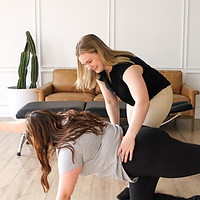


Why People Choose Our Chiropractic & Physical Therapy Clinic in Carrollton
Our patients consistently share that what sets us apart is our thoughtful, personalized approach to care. Our doctors take the time to listen, understand the root cause of pain, and create treatment plans tailored to each individual, whether you’re recovering from a sports injury, managing chronic pain, or simply want to move better in your daily life.

Personalized, One-on-One Care
Every visit is 45 minutes or more, never rushed, and fully focused on you.
Root-Cause Approach
We don’t just treat symptoms. We identify and treat the source of pain for lasting relief.
Comprehensive Treatment Options
From chiropractic adjustments and physical therapy to dry needling, shockwave, and soft tissue work...all in one place.
Athlete-Informed Expertise
Our doctors are athletes themselves and understand the unique demands of training and performance.
Real Results That Last
Patients experience measurable improvements in pain, mobility, and strength, often within just a few visits.
Education & Prevention
We empower you with exercises, movement tips, and maintenance plans to stay pain-free.
Trusted by All Ages & Activity Levels
From weekend warriors to lifelong athletes, our patients feel supported and seen.
Compassionate, Down-to-Earth Team
Friendly, professional, and genuinely chiropractors and physical therapists who are invested in your health and goals.
Modern, Evidence-Based Care
We invest in our own continuing education and combine the latest techniques and technology with years of hands-on experience.
Life-Changing Results
Our patients describe their care as “transformative,” “life-saving,” and “the best they’ve ever experienced.”



Insurance & Pricing
We accept and are contracted with certain health insurance companies. We are in network with BlueCross BlueShield and United Healthcare. We are more than happy to run your benefits and see if we are considered in network and what those costs would look like. Otherwise, we do allow time of service cash rates as well if you do not want to use insurance or if you do not have insurance.
We accept health insurance, FSA and HSA.

